Training the Un-trainable: Reaching Tech Haters
May 28, 2026
Building Digital Trust: How Transparency Wins Customers
June 1, 2026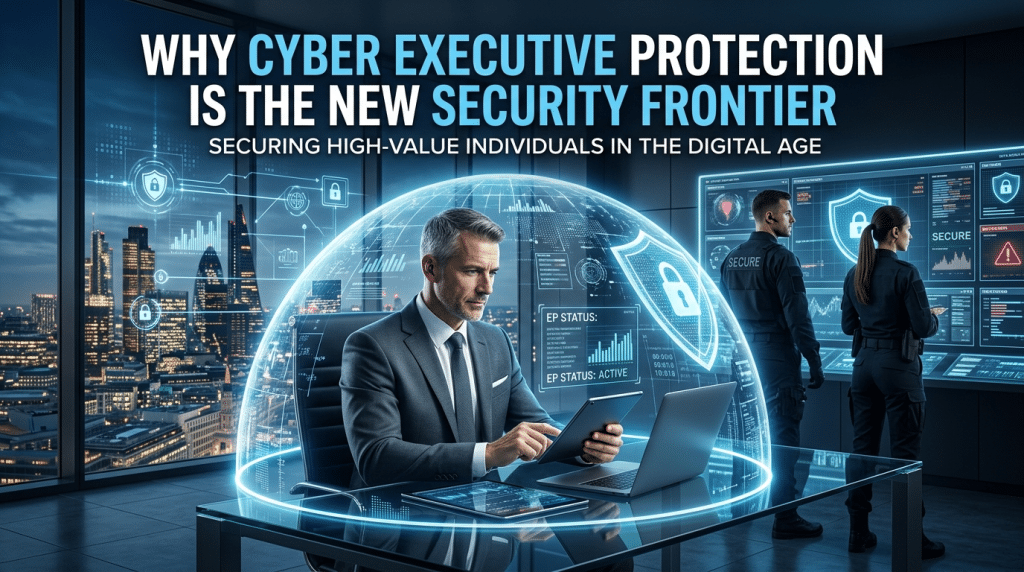
Hardening the C-Suite: Why Executive Protection Is the New Frontier of Corporate Security
In the traditional corporate security model, protecting the executive team was primarily a physical concern. It conjured images of executive protection details, armored vehicles, secure boardroom glass, and specialized entry protocols at headquarters. The goal was straightforward: secure the perimeter of the physical building and ensure the safety of leadership during corporate travel.
As we navigate the business landscape of 2026, that traditional paradigm has been completely shattered.
Today, the most significant threats to corporate leadership do not approach through the front lobby. They arrive digitally, quietly, and with devastating precision. Cybercriminals have realized that a company’s executive team represents a high-value, high-vulnerability gateway into the enterprise’s most sensitive data and capital reserves. In an era defined by hyper-targeted social engineering, automated deepfakes, and blended digital footprints, Digital Executive Protection has emerged as the essential new frontier of business security.
The Evolution of the Executive Target
The modern executive is a highly visible public figure. Between professional LinkedIn updates, corporate press releases, media interviews, and industry keynotes, leaders leave a massive digital trail. While this visibility is essential for brand building and customer trust, it provides threat actors with a comprehensive dossier of actionable intelligence.
With the rise of sophisticated generative AI tools, hackers no longer need weeks of reconnaissance to launch a convincing attack. They can harvest a thirty-second clip of a CEO speaking at a conference to clone their voice perfectly. They can analyze historical corporate correspondence to replicate their writing style, tone, and signature formatting.
Once this data is gathered, the executive is targeted through advanced Business Email Compromise (BEC) or spear-phishing campaigns. Because the communications look and sound entirely authentic, they are uniquely engineered to bypass traditional email filters and exploit human trust. When a cybercriminal successfully compromises a C-suite account, they aren’t just hacking an individual mailbox—they are seizing the administrative authority of the entire enterprise.
The Convergence of Personal and Professional Risk
The shift to hybrid work has further complicated the executive risk profile. A leader may use a company-managed laptop while sitting at headquarters, but switch to a personal tablet while working from home, or check critical cloud repositories from a personal smartphone while traveling.
This blending of personal and professional digital footprints creates a massive security blind spot. Cybercriminals frequently target an executive’s unmanaged personal ecosystem—their private email accounts, home Wi-Fi networks, or family members’ devices—as a back-door mechanism to breach the corporate network.
A home automation system, an unpatched personal device, or a weak password on a personal travel app can serve as the initial point of entry. Once inside the personal network, a hacker can compromise session tokens or plant silent monitoring software, allowing them to ride along into corporate databases the next time the executive logs in.
Constructing the Executive Shield
Hardening the C-suite requires moving past basic employee security standards and deploying an elite, personalized defensive posture. True executive protection requires a systemized integration of advanced technical controls and strict verification protocols:
1. Identity-First Conditional Access
The administrative keys of your enterprise must be governed by strict, real-time risk evaluation. Implement conditional access rules that continuously analyze the context of every executive login. If a connection attempt originates from an unusual geographic location, an unmanaged network, or an unrecognized machine, the system must automatically block access or demand a high-level cryptographic hardware token (such as a physical security key) before clearing the login.
2. Advanced Out-of-Band Financial Protocols
Eliminate manual, text-based authorization for high-stakes capital movements. Establish an unwritten, offline verbal pass-phrase known only to the executive team and the financial controllers. When an urgent financial request or wire transfer is initiated—even if it arrives from the CEO’s verified email or features a realistic voice confirmation—the transaction must remain frozen until the verbal out-of-band passphrase is provided, immediately neutralizing the threat of AI voice clones and deepfakes.
3. Continuous Digital Footprint Hardening
Corporate security teams must actively audit and protect the personal digital lives of leadership. This includes implementing enterprise-grade security protocols on home networks, deploying secure Mobile Device Management (MDM) containers on personal hardware, and continually monitoring the dark web for exposed credentials or personal identification data belonging to the executive family.
Conclusion: Leadership Demands Defense
In the modern digital economy, protecting your leadership is a fundamental element of enterprise risk management. An attack that compromises an executive can result in catastrophic capital loss, severe regulatory penalties, and a permanent destruction of client trust. By recognizing the C-suite as a critical defensive boundary and investing in a specialized framework of digital protection, you secure not just your personnel, but the very future of your enterprise.
Are your executives carrying your company’s crown jewels without a shield? Contact Krypto IT today for a comprehensive “Executive Risk and Digital Protection Audit” and let’s harden your leadership perimeter.