Stop Paying for Repairs: How to Transform Your IT From a Cost Center to a Growth Engine
January 4, 2026
Is Your Inbox Lying? The Rise of Deepfake Email Scams
January 7, 2026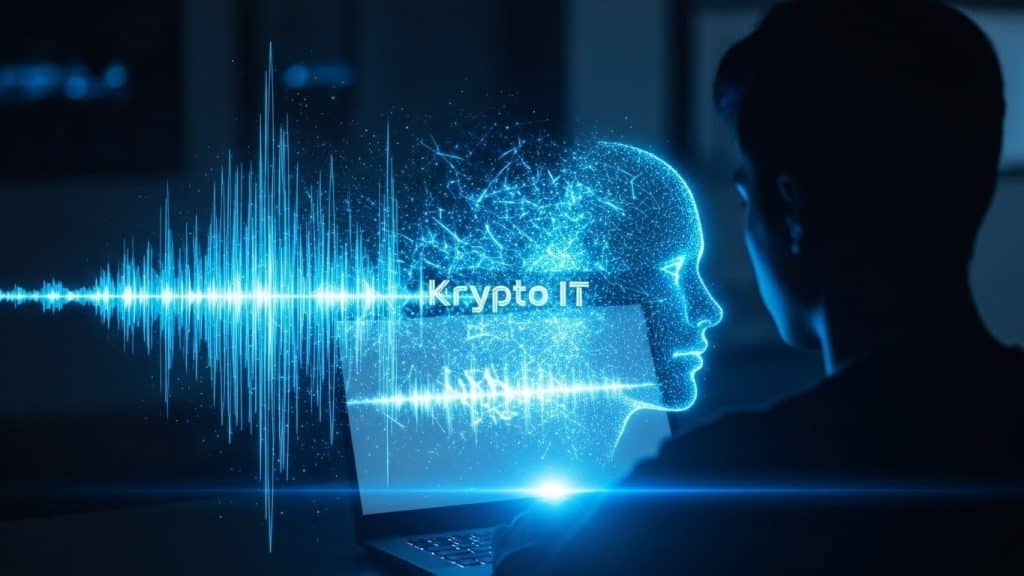
By the Team at Krypto IT | Cybersecurity Experts Serving Houston SMBs
For years, the “gold standard” for spotting a phishing attempt was simple: look for the typos. We told our employees to watch for broken English, strange punctuation, or generic greetings like “Dear Valued Customer.” For a long time, this was effective. Most cybercriminals were operating from overseas, using translation tools that were clumsy at best.
But in 2026, the game has changed forever. The “Nigerian Prince” has been replaced by an AI that has read every email you’ve ever written.
With the rise of Large Language Models (LLMs) like ChatGPT, Claude, and specialized “Dark Web” AI tools, hackers can now generate perfectly worded, highly personalized phishing lures in seconds. This isn’t just about better spelling; it’s about the “AI-powered mimicry” of your professional voice. At Krypto IT, we are seeing a massive surge in AI-driven social engineering attacks targeting Houston SMBs. Here is what you need to know about the new face of phishing.
1. Mimicking the CEO’s “Voice”
The most dangerous form of phishing is Business Email Compromise (BEC). Traditionally, a hacker would try to impersonate a CEO to trick an employee into wiring money or sharing sensitive data. In the past, these were often easy to spot because the “voice” was off.
Today, a hacker can take a few public LinkedIn posts, a recorded keynote speech, or a leaked internal memo from a CEO and feed it into an AI with a simple prompt: “Write an urgent email to the accounting department in the style of this person, asking for a rush payment on a confidential vendor invoice.”
The result is an email that uses the CEO’s specific vocabulary, their preferred sign-off, and even their characteristic level of “urgency.” When an employee receives an email that sounds exactly like their boss, they are far more likely to bypass security protocols.
2. Beyond Text: The Rise of AI Voice Cloning
While ChatGPT handles the text, other AI tools are tackling audio. This is the new frontier of “mimicking your voice.” With as little as three seconds of recorded audio—easily scraped from a YouTube video, a podcast, or even a voicemail greeting—AI can clone a person’s voice with terrifying accuracy.
We are now seeing “Multi-Channel Phishing.” An employee might receive a perfectly written AI email, followed by a brief phone call from a “voice” that sounds exactly like their manager, confirming the request. This “double-tap” approach is incredibly effective at bypassing the natural skepticism of employees.
3. Translation and Global Reach
AI has removed the language barrier for cybercriminals. A hacker in a non-English speaking country can now generate a lure in perfect, idiomatic American English. They can even include local Houston references—mentioning the weather, a local sports score, or a specific neighborhood—to build a false sense of rapport and trust with the victim.
In the cybersecurity world, we look at the probability of a successful attack using this simple formula:
AI allows hackers to maximize all three variables simultaneously. They build Trust through perfect mimicry, create Urgency with AI-generated scenarios, and use automation to hit a massive Volume of targets.
4. Phishing-at-Scale: Personalized for Everyone
Before AI, a “spear-phishing” attack (a highly targeted attack) was time-consuming. A hacker had to research a specific individual and manually write a custom lure. This limited how many people they could target.
AI has turned spear-phishing into a factory process. A hacker can feed a list of 1,000 employees into an AI, along with their job titles and public social media data, and tell the AI to generate a unique, personalized phishing email for every single person on that list. This level of mass-personalization was impossible only two years ago.
How to Protect Your Houston Business
When the “typo check” is no longer enough, how do you defend your business? At Krypto IT, we recommend a layered defense that focuses on process as much as technology:
- Multi-Factor Authentication (MFA): Even if an AI tricks an employee into giving up their password, MFA acts as the ultimate “stop sign” for the hacker.
- Verbally Verify “High-Risk” Requests: Any request involving a change in bank details, a wire transfer, or the sharing of employee tax data (W-2s) must be verified through a secondary, trusted channel—ideally a face-to-face conversation or a known phone number.
- Modern Security Awareness Training: Standard training is outdated. You need a program that specifically teaches employees about AI mimicry and deepfakes.
- Advanced Email Filtering: Use AI to fight AI. We implement email security tools that look for the “metadata” of a spoofed email rather than just the content.
Conclusion: Trust, but Verify
The “AI revolution” is a gift to hackers, but it is also a wake-up call for business owners. In a world where you can no longer trust your eyes or ears, you must trust your Security Processes.
Krypto IT is dedicated to keeping Houston SMBs ahead of the AI threat curve. We don’t just fix computers; we build the “Human and Digital Firewall” that protects your future.
Are your employees prepared for the era of AI phishing? Contact Krypto IT today for a complimentary Phishing Risk Assessment and see where your vulnerabilities lie.