Misconfigured Firewalls: A preventable breach story
August 12, 2026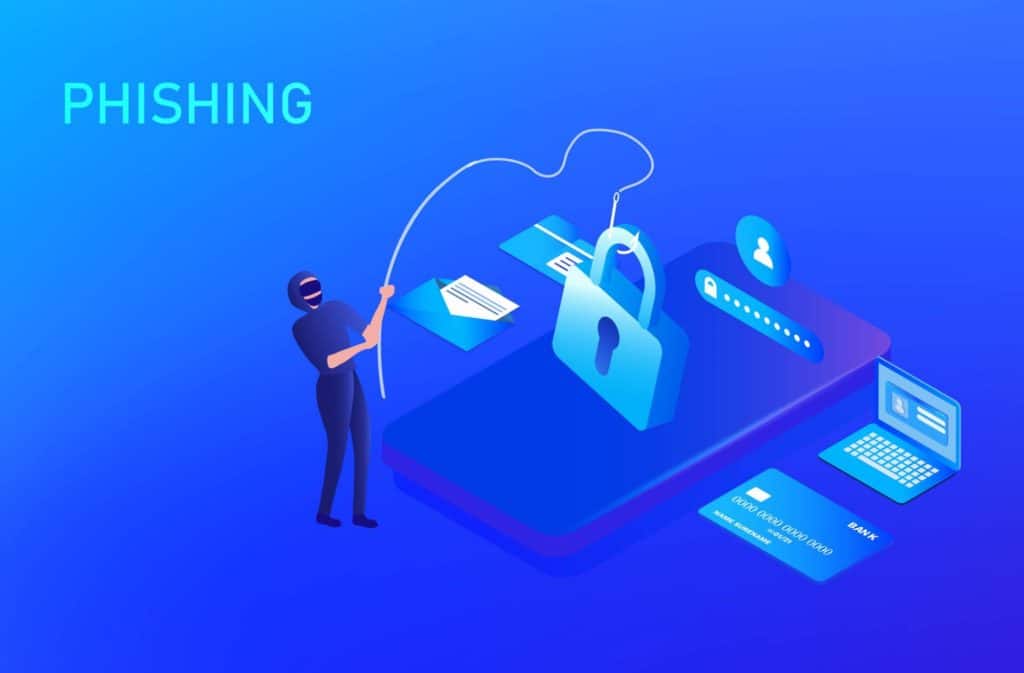
The Phishing Simulation Twist: What Happened When We Tested a Client’s Staff
When business executives discuss security awareness training, they often view phishing simulations as a simple pass-or-fail exercise. They assume the results will be straightforward: alert employees will spot the fake email and report it, while distracted employees will click the link and fail the test.
However, real-world social engineering rarely follows a simple template. Cybercriminals do not just send poorly formatted emails claiming you have won a foreign lottery. Modern threat actors study organizational structures, mimic internal communication styles, and exploit psychological triggers like urgency, curiosity, and fear of missing out.
Recently, Krypto IT launched a controlled phishing simulation for a mid-sized client to evaluate their human security posture. While we anticipated a standard mix of reports and clicks, the test revealed an unexpected twist—one that changed how the client approaches employee security training forever.
The Setup: Crafting a Realistic Scenario
Rather than sending a generic, easily recognizable phishing template with obvious typos and suspicious domain names, our team designed a scenario tailored to the client’s actual workplace routines.
We noticed that the client frequently ordered catered lunches for team meetings and company milestones. Leveraging this familiar workplace habit, we crafted a harmless simulated phishing campaign disguised as an internal notification:
- The Subject Line: “Free Lunch Voucher: Select Your Meal Option for Friday’s Team Meeting”
- The Lure: An appealing notification offering employees a choice of catered meal options if they clicked a link to fill out a short preference form.
- The Indicators: To keep the test fair, we embedded subtle red flags that trained eyes should catch: a slightly altered sender domain (company-cateringservices.com instead of the internal domain), an external link pointing to a non-standard landing page, and a tight deadline forcing a quick response.
The Simulation Begins: The Initial Rush
At 10:00 AM on a Tuesday, the email was delivered to fifty employee inboxes across accounting, sales, customer support, and executive management.
Within fifteen minutes, the tracking dashboard lit up. As expected, a small percentage of employees clicked the link immediately without checking the sender address or hovering over the hyperlink. Driven by the prospect of a free meal and a tight deadline, they entered their credentials on the simulated landing page.
By the one-hour mark, several security-conscious employees spotted the look-alike domain name and utilized the company’s designated security button to report the message to the help desk. So far, the campaign was unfolding like a typical baseline phishing assessment.
Then came the twist.
The Twist: When Good Intentions Backfire
Rather than the campaign fizzling out after the initial wave of clicks and reports, a second spike in activity occurred around 1:30 PM.
Unexpectedly, several employees who had received the email did not keep it to themselves. Believing they were doing a helpful favor for their coworkers, a team member forwarded the email to colleagues in other departments who were not part of the initial test group, adding a message: “Hey team, don’t forget to claim your free lunch for Friday!”
This internal forwarding created an unintended snowball effect. Because the forwarded message now came directly from a trusted internal colleague’s actual email address, recipient suspicion dropped to zero. Employees who would normally scrutinize external links clicked the forwarded link without hesitation because it was vouched for by a teammate sitting just across the hall.
A well-meaning employee, attempting to share a workplace perk, had accidentally accelerated the spread of a simulated attack across the entire organization.
What the Experiment Taught Us About Human Risk
This simulation highlighted a critical vulnerability that standard multiple-choice security quizzes completely miss: social proof and internal trust can bypass technical scrutiny.
When a threat actor successfully tricks just one employee into forwarding a malicious link or file internally, standard email filters and user skepticism crumble. The incident provided several valuable lessons for the client’s leadership team:
- Internal Forwarding Increases Risk: Employees must be taught never to forward unverified external links or forms internally, even if they believe the offer is legitimate.
- Context Trumps Typos: Modern phishing attacks succeed because they fit naturally into daily routines, not because users are careless. Training must focus on identifying context anomalies, not just obvious spelling errors.
- Reporting Needs to Be Instant: Once an employee spots a suspicious email, alerting IT quickly allows administrators to purge the message from all inboxes before internal sharing begins.
Turning a Vulnerability into a Security Culture
Following the simulation, Krypto IT hosted an interactive debrief with the client’s entire workforce. Rather than reprimanding employees who fell for the lure or forwarded the message, we used the event as an educational opportunity.
We walked through the exact indicators that revealed the email was fake, explained how attackers leverage social proof to spread threats internally, and reinforced simple reporting habits. Today, the client conducts regular, varied simulations and maintains a thriving security culture where employees actively verify unusual requests before taking action.
Strengthen Your Human Firewall with Krypto IT
Your employees are your first line of defense against cyber threats, but they need realistic training to stay sharp. At Krypto IT, we help Houston businesses build resilient security cultures through customized phishing simulations, automated threat reporting tools, and continuous security awareness training.
Is your team prepared to spot a realistic phishing attack? Contact Krypto IT today to schedule a security awareness assessment.
Krypto IT shares what happened during a real client phishing test when an employee accidentally forwarded a fake lure to coworkers.