Timing the Attack: Why Hackers Target Your Weekend
July 10, 2026
The Danger of Password Fatigue: Reversing Security Culture
July 13, 2026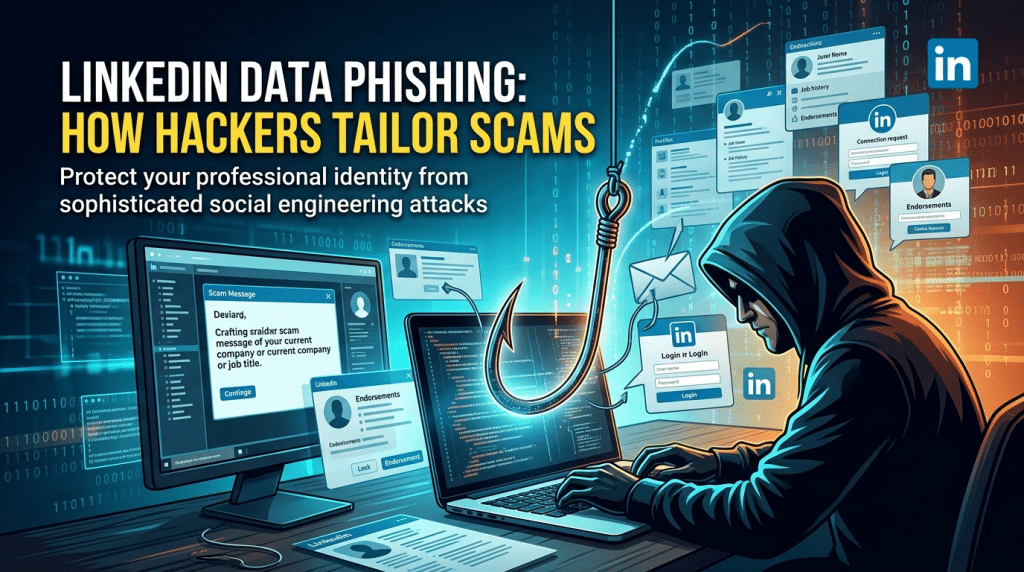
The Spear Phish: How Bad Actors Personalize Scams Using LinkedIn Data
When evaluating corporate data risk, executive leadership typically focuses on the immediate perimeter. Organizations deploy advanced technical solutions, manage multi-factor authentication loops, and implement strict software parameters to isolate their backend servers from external exploitation. The common operating assumption is that cybercriminals are faceless entities attempting to breach network architectures using generic, automated payloads.
However, modern cybercriminal syndicates frequently bypass these direct technological perimeters by exploiting an asset that sits entirely exposed to the public: the professional profile data your workforce willingly shares on social networking channels.
This highly effective methodology is known as spear phishing or hyper-personalized social engineering. Instead of launching a generic email blast containing obvious spelling errors or generic greetings, threat actors carefully study your team’s LinkedIn profiles, professional histories, and corporate relationships. By weaponizing the authentic details of your employees’ public professional lives, hackers build flawless, trusted narratives that sail directly past technical filters and human suspicion. To protect your corporate treasury, secure your client data repositories, and mitigate organizational risk, leadership must look beyond software configurations and understand the hidden mechanics of data-driven spear phishing.
The Anatomy of an Open-Source Intelligence Harvest
To understand why traditional security training and standard inbox firewalls frequently fail to intercept spear phishing campaigns, you must analyze how modern threat actors utilize open-source intelligence (OSINT). The attack process begins long before a malicious link or fraudulent document is generated, relying on the public details published by your workforce on professional networking sites.
Cybercriminals treat LinkedIn as a massive, searchable corporate directory. They target specific corporate roles within your architecture—focusing heavily on new hires who are unfamiliar with internal processes, human resources personnel who handle incoming external files daily, and accounting staff who manage active payment streams.
An attacker will systematically harvest three core layers of data from a target employee’s profile:
1. Corporate Hierarchy Mapping
By reviewing connections, recommendations, and organizational listings, the threat actor maps out the exact relationship lines between your team members. They identify who reports to whom, which executives manage specific divisions, and which project managers work together on active contracts. When the malicious message arrives, it will claim to originate from an authentic supervisor or co-worker, referencing accurate internal reporting lines.
2. Operational Language and Project Context
Hackers study the specific industry terminology, project milestones, and corporate software tools listed on your employees’ profiles. If a worker posts an update celebrating the implementation of a new cloud repository or a recent corporate partnership, the attacker will tailor their phishing script to mirror that exact context. The subsequent email might claim to be an urgent password reset for that specific cloud tool or a follow-up document from the referenced corporate partner.
3. Timeline Exploitation
New job transitions are an absolute favorite target window for cybercriminals. When an individual updates their profile to reflect a new position, they are operating in a state of high professional anxiety and unfamiliarity with corporate protocols. Threat actors launch high-pressure scripts at these vulnerable workers, appearing as internal IT personnel demanding immediate security token alignment or executive supervisors requesting emergency out-of-band support.
Systemizing a Rigid, Data-First Infrastructure Perimeter
Mitigating the threat of hyper-personalized spear phishing does not require restricting your workforce’s professional growth, banning social networking use, or introducing cumbersome administrative barriers that slow down daily productivity. True operational resilience relies on deploying automated, zero-trust infrastructure guardrails that protect your network edge even when a highly convincing, personalized lure succeeds.
At Krypto IT, we help growth-minded companies eliminate these exposed supply chain blind spots by deploying continuous, human-first defensive perimeters:
- Deploying Enterprise-Grade Secure Web Gateways (SWG): We eliminate browser-driven vulnerabilities by implementing advanced DNS-layer filtering and cloud URL isolation. Our security tools analyze web requests in real-time, instantly isolating suspicious link executions in secure sandboxes before they touch your local endpoints. Even if an employee is tricked by a highly personalized LinkedIn hook, the malicious lookalike domain is blocked before the page can load.
- Enforcing Strict Inbound Protection and Domain Auditing: We strip away the visual illusions used by threat actors. We configure your enterprise mail networks to automatically append distinct visual warning flags to any incoming email originating outside your internal corporate architecture. Furthermore, we deploy advanced protection engines that scan for newly registered lookalike domains that mimic your company or your trusted partners, immediately isolating suspicious correspondence before it hits an inbox.
- Anchoring Internal Environments in Frictionless Biometric Identity: We isolate your core administrative and payment processing networks from external manipulation. We connect all system entry points with rapid biometric single sign-on tools (such as Windows Hello and Touch ID). This ensures that even if an attacker tricks a worker into surrendering a text-string password or copying a verification code, the threat actor cannot step into your network rooms without sub-second hardware-validated biometric verification, keeping your infrastructure safe and under your absolute control.
Conclusion: Verification Beats Personalization
In the modern decentralized economy, expecting your workforce to manually spot every hyper-personalized scam while leaving your external data footprint unmanaged is an unsustainable approach to corporate risk management. Software parameters do not fall for flattery or professional context, but humans do. Cybercriminals actively weaponize the professional trust networks you display publicly to execute silent, catastrophic network intrusions. True resilience demands absolute visibility across both your digital parameters and your team’s behavioral workflows. By hardcoding strict inbound filtering rules, isolating external links, and anchoring your data rooms in robust biometric identity, you clear the invisible open-source data tax and ensure your corporate capital remains entirely secure.
Are your employees’ public professional profiles quietly providing cybercriminals with the exact blueprints needed to execute a devastating data breach? Contact Krypto IT today for a comprehensive Technical Infrastructure and Network Perimeter Vulnerability Review, and let’s harden your digital boundary.