The Lost Laptop: Can You Wipe Your Data Remotely?
May 13, 2026
Social Media Hijacked? How to Reclaim Your Brand
May 14, 2026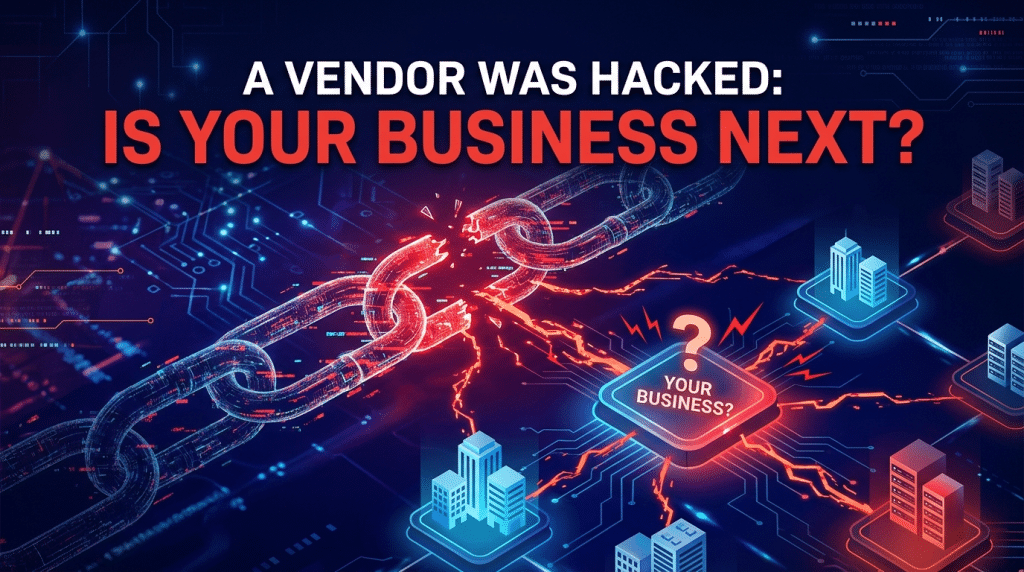
The Supply Chain Ripple Effect: How to Protect Your Business When a Vendor Is Compromised
In the interconnected landscape of 2026, no Houston business is an island. We rely on a vast ecosystem of third-party vendors for everything from cloud-based payroll and CRM software to HVAC monitoring and industrial logistics. While these partnerships drive efficiency, they also create a “backdoor” into your network.
When you hear the news that one of your vendors—perhaps your specialized engineering software provider or your local Houston accounting firm—has suffered a data breach, the question isn’t just “What did they lose?” but rather “Are we next?” In the world of cybersecurity, this is known as a Supply Chain Attack. Hackers realize that your front door might be locked, so they look for a vendor who already has the keys.
If a vendor is hacked, your business is not automatically doomed, but you are in a high-risk window. Here is how to navigate a third-party breach and ensure the ripple effect stops at your doorstep.
The “Trust Relationship” Risk
The danger of a vendor breach lies in the level of access you have granted them. Most modern business relationships require a technical handshake. This might be:
- API Integrations: Your software “talking” directly to their software.
- Remote Access: An IT or maintenance vendor who has a permanent VPN tunnel into your servers.
- Email Trust: Your employees are used to receiving and opening invoices or reports from this specific vendor.
If a vendor is compromised, a hacker can use these established “Trust Relationships” to move laterally into your system. They can send malicious files from the vendor’s real email address or travel across a VPN tunnel that was never properly closed.
Immediate Action: The Isolation Protocol
The moment you become aware of a vendor breach, your priority is Isolation. You must assume that the connection between your company and that vendor is compromised until proven otherwise.
- Revoke Access: Immediately disable any VPN accounts, service accounts, or API keys associated with that vendor. It is better to have a temporary service interruption than a total network encryption.
- Force Password Resets: If your employees used the same credentials for the vendor’s portal as they do for your corporate network (a common mistake), you must trigger a mandatory password reset for your entire team.
- Audit Active Sessions: Check your cloud environment for any active sessions originating from the vendor’s IP addresses and terminate them immediately.
The “Phishing” Aftermath
In many cases, the goal of a vendor hack is not to breach your server directly, but to steal information for a highly targeted phishing campaign.
If a hacker steals a vendor’s email history, they can see the exact tone and format of the invoices you usually receive. A week later, you might receive a perfectly formatted email from that vendor asking you to update your “payment details.” Because the email looks legitimate and the sender is a trusted partner, your accounting team is far more likely to fall for the trap.
Education is critical here. Your team must be alerted to the breach so they can apply “Extreme Scrutiny” to every communication from that vendor for at least 90 days.
Hardening the Future: The Sentinel Vendor Standard
In the 2026 Trust Economy, you cannot afford to wait for a breach to happen. You must build a “Sentinel Standard” for your supply chain. At Krypto IT, we help Houston firms implement three layers of third-party defense:
- The Principle of Least Privilege: Never give a vendor more access than they absolutely need to perform their job. If they only need to monitor your HVAC, they should not have access to your file server.
- Conditional Access: Implement rules that require vendors to use Multi-Factor Authentication (MFA) and connect only from “Compliant” devices when accessing your network.
- Regular Vendor Audits: Make it a standard practice to review vendor access every quarter. If you no longer do business with a company, their digital keys should be destroyed immediately.
Conclusion: Vigilance is the Best Partnership
A vendor breach is a stressful event, but it doesn’t have to be a catastrophe for your Houston firm. By treating your supply chain as a potential attack vector and maintaining a “Zero-Trust” posture, you can enjoy the benefits of modern partnerships without inheriting their vulnerabilities.
Is your network wide open to your vendors? Contact Krypto IT today for a “Third-Party Risk Assessment” and let’s secure your backdoor.