Top Managed Services Checklist: What to Expect
August 16, 2026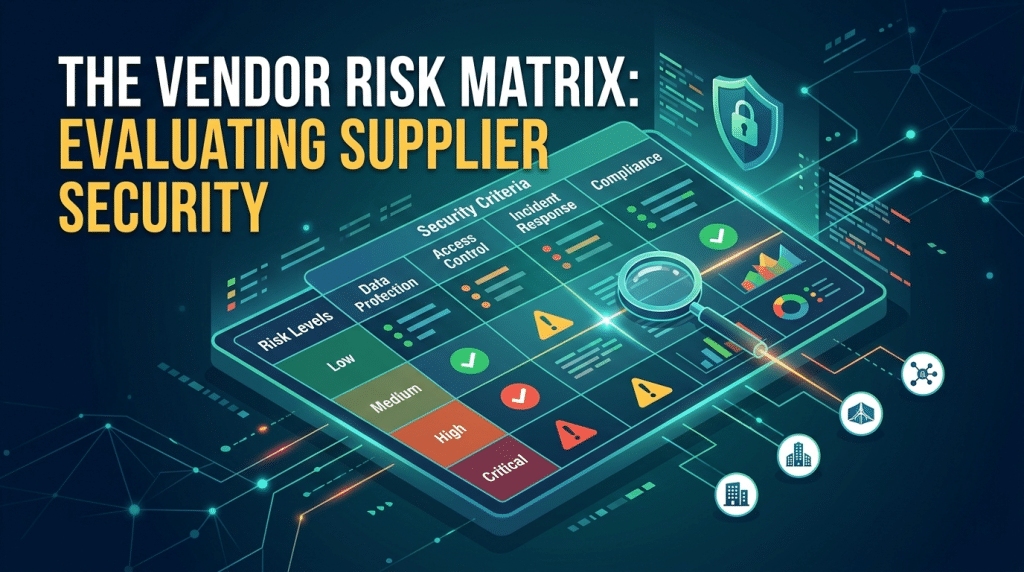
The Vendor Risk Matrix: How to Evaluate Your Suppliers’ Cybersecurity Before Signing Contracts
Modern businesses rely on an interconnected ecosystem of third-party vendors to operate efficiently. From cloud software providers and payroll processors to external marketing agencies and specialized consultants, outsourcing critical business functions allows companies to remain agile and competitive.
However, every third-party integration, shared folder, and vendor login credential broadens your organization’s attack surface. When you grant a third party access to your internal systems or share sensitive customer data with an external platform, their security vulnerabilities become your liabilities.
Supply chain compromises and third-party data breaches have quickly become some of the most common vectors for unauthorized data exposure. Evaluating your suppliers’ cybersecurity hygiene before signing a contract is no longer optional—it is a vital risk management imperative.
Here is how to build and implement a structured Vendor Risk Matrix to evaluate third-party cybersecurity before committing to a contract.
What Is a Vendor Risk Matrix?
A Vendor Risk Matrix is a structured evaluation framework that categorizes suppliers based on two primary dimensions: data sensitivity (the confidentiality and regulatory scope of data they touch) and operational dependency (how heavily your daily business relies on their systems).
By mapping vendors onto a tiered risk model, you avoid applying a one-size-fits-all approach. A freelance graphic designer who never touches internal customer databases requires a completely different security vetting process than a cloud payroll vendor processing direct deposits and Social Security numbers.
Step 1: Categorize and Tier Your Suppliers
Before sending extensive security questionnaires, classify prospective vendors into distinct risk tiers based on access level and data exposure:
- Tier 1 (Critical Risk): Vendors that host, store, or process regulated data (such as financial records, personally identifiable information, or healthcare data) or maintain persistent direct network connections to your core infrastructure.
- Tier 2 (Moderate Risk): Vendors with limited access to non-sensitive internal operational files, business collaboration tools, or proprietary workflows, but no access to financial databases or core customer records.
- Tier 3 (Low Risk): Suppliers providing commodity services or physical goods with zero access to your corporate network, hardware, or confidential business data.
Step 2: Key Security Pillars to Assess Before Signing
When evaluating Tier 1 and Tier 2 suppliers, look beyond standard marketing assurances. Require tangible proof across these essential security areas:
1. Identity Governance and Access Controls
Ask prospective suppliers how they govern administrative access to their systems. Do they mandate hardware-backed Multi-Factor Authentication (MFA) across all staff accounts? Do they enforce the principle of least privilege, ensuring only employees who strictly need your data to deliver the service have access?
2. Encryption and Data Storage Practices
Ensure that sensitive company data is encrypted both in transit (using modern cryptographic protocols like TLS 1.3) and at rest (using AES-256 standards). Inquire about data residency: where are their physical data centers located, and what multi-tenant isolation safeguards prevent other clients from viewing your information?
3. Independent Security Certifications and Audits
Request third-party compliance documentation. Reputable enterprise vendors should readily provide SOC 2 Type II reports, ISO/IEC 27001 certifications, or third-party penetration test executive summaries. These independent audits verify that the vendor’s stated security controls are actively practiced and verified over time.
4. Incident Response and Breach Notification Timelines
Review the vendor’s documented Incident Response Plan. In the event of a suspected or confirmed security incident involving your data, how quickly are they contractually obligated to notify you? Standard best practice requires notification within 24 to 72 hours of discovery.
Step 3: Enforcing Security in the Service Level Agreement (SLA)
Cybersecurity evaluations should directly inform contract negotiations. Make sure your business agreements include enforceable security requirements:
- Right to Audit Clauses: Retain the contractual right to review updated compliance reports or perform annual security evaluations.
- Data Return and Destruction Protocols: Establish clear, verified procedures for permanently destroying or returning all company data upon contract termination.
- Mandatory Incident Reporting: Include clear penalties or termination clauses if the vendor fails to report a security breach within the agreed-upon timeframe.
Mitigate Third-Party Risk with Krypto IT
Managing third-party supplier risk is critical to safeguarding your business’s reputation, client trust, and bottom line.
At Krypto IT, we help Houston organizations establish robust vendor management frameworks, review third-party technical assessments, and implement Zero-Trust safeguards that protect internal networks from supply chain threats.
Are third-party vendors creating hidden security gaps in your business? Contact Krypto IT today to schedule a comprehensive third-party vendor risk assessment.