Creating a “Security First” Culture: How to Lead Without Becoming the Office Police
February 15, 2026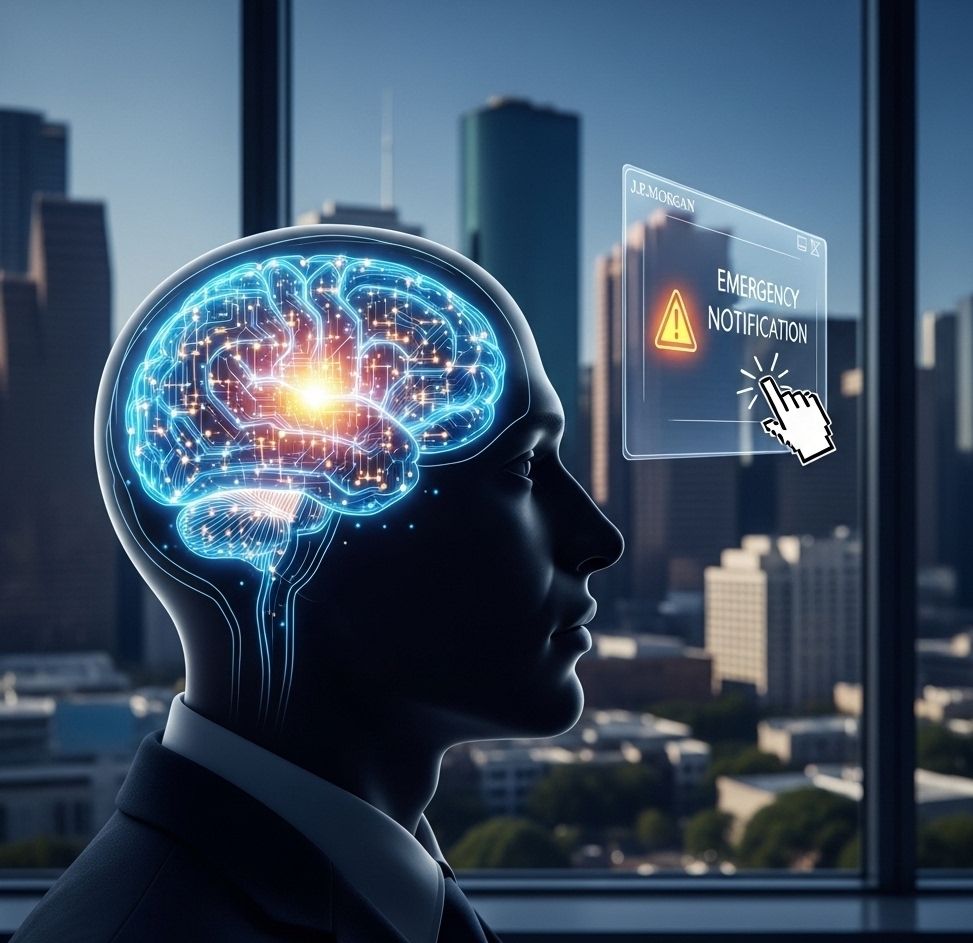
By the Team at Krypto IT | Your Houston Partners in Human-Centric Cybersecurity
It’s a scenario we see frequently at Krypto IT: A brilliant CFO in Downtown Houston, someone who manages millions of dollars with surgical precision, accidentally clicks a link in a phishing email and compromises the entire firm’s network.
When this happens, the first reaction is usually deep embarrassment. “How could I be so stupid?” they ask. But the truth is, intelligence has very little to do with it. Modern cybercriminals aren’t just experts in code; they are experts in behavioral psychology. They don’t hack your computer; they hack your brain.
In 2026, with the rise of AI-driven social engineering, understanding the “why” behind the click is the only way to build a truly resilient defense. Here is the psychology of a scam and why even the smartest people in your office are vulnerable.
1. The Amygdala Hijack: Fear Over Logic
The human brain is divided into parts that evolved at different times. The prefrontal cortex is the “smart” part—it handles logic, math, and long-term planning. The amygdala is the “ancient” part—it handles the “fight or flight” response.
Hackers know that if they can trigger your amygdala, your prefrontal cortex—the part that knows better—effectively turns off. This is why so many phishing emails involve a crisis.
- “Your account will be deleted in 30 minutes.”
- “Suspicious activity detected on your payroll.”
- “Urgent: Disciplinary action required.”
When you are in a state of fear or high urgency, your brain bypasses logical analysis to take immediate action. We call this the Cognitive Load Factor.
As the Cognitive Load Factor increases, the probability of a “bad click” approaches 100%, regardless of the victim’s IQ.
2. The Authority Bias: The “CEO” Trap
We are hardwired to respect and respond to authority. In a professional Houston environment, if you receive a request from a senior partner or the CEO, your instinct is to comply quickly to prove your value.
Hackers exploit this through Business Email Compromise (BEC). By spoofing an executive’s name, they create a psychological pressure that makes an employee skip standard security protocols. “Mike is in a meeting and needs these gift cards for a client right now.” The employee isn’t being “stupid”; they are being a “good employee” in a high-pressure situation.
3. The Pattern of Familiarity
The brain is an efficiency machine. To save energy, it uses “heuristics”—shortcuts based on familiar patterns. If you receive fifty emails a day from Microsoft 365, your brain stops “looking” at the login page. You see the logo, you see the blue button, and you click.
In 2026, hackers use Adversary-in-the-Middle (AiTM) attacks to create “Perfect Proxies.” They show you a login page that is an exact, live copy of the real thing. Because your brain recognizes the pattern, it doesn’t look for the slight misspelling in the URL or the missing “Secure” icon. You aren’t being careless; your brain is just trying to be efficient.
4. The “Cognitive Ease” of AI Deepfakes
The newest psychological weapon in the hacker’s arsenal is Deepfake technology. In Houston, where many business deals are still done over a quick phone call or a video chat, we trust our senses.
When you hear your manager’s voice on the phone or see their face on a grainy Zoom call asking for a “quick favor,” your brain enters a state of Cognitive Ease. You aren’t on your guard because your senses are telling you that you are talking to a friend. Hackers use this comfort to bypass even the strictest technical firewalls.
5. Defense Through “Strategic Slowness”
If scams are built on speed and emotion, the only defense is Strategic Slowness. At Krypto IT, we teach our clients a simple psychological trick: The Five-Second Rule.
Before clicking any link or responding to any urgent request, take five seconds to ask three questions:
- Is the medium right? (Would my boss really text me about a wire transfer?)
- Is the timing weird? (Why is the IRS emailing me at 8:00 PM on a Saturday?)
- What happens if I don’t click? (In 99% of cases, nothing bad happens if you wait 10 minutes to verify the request via a separate phone call.)
How Krypto IT Builds Cognitive Resilience
At Krypto IT, we don’t just manage your IT; we train your team to recognize these psychological traps. Our approach to “Human Risk Management” includes:
- Empathy-Based Training: We move away from “shaming” victims and focus on empowering “Human Sensors.”
- Contextual Phishing Tests: We send simulated tests that reflect the actual high-pressure scenarios your Houston team faces every day.
- MFA Everywhere: We implement technology that protects you even when your brain makes a mistake.
Conclusion: Awareness is the Ultimate Firewall
The most sophisticated security tool in your office is sitting between your employees’ ears. By understanding the psychology of a scam, you take the power away from the hacker and give it back to your team.
Think your team is “too smart” to be scammed? Contact Krypto IT today for a “Human Risk Assessment” and let’s see how we can strengthen your real-world defenses.