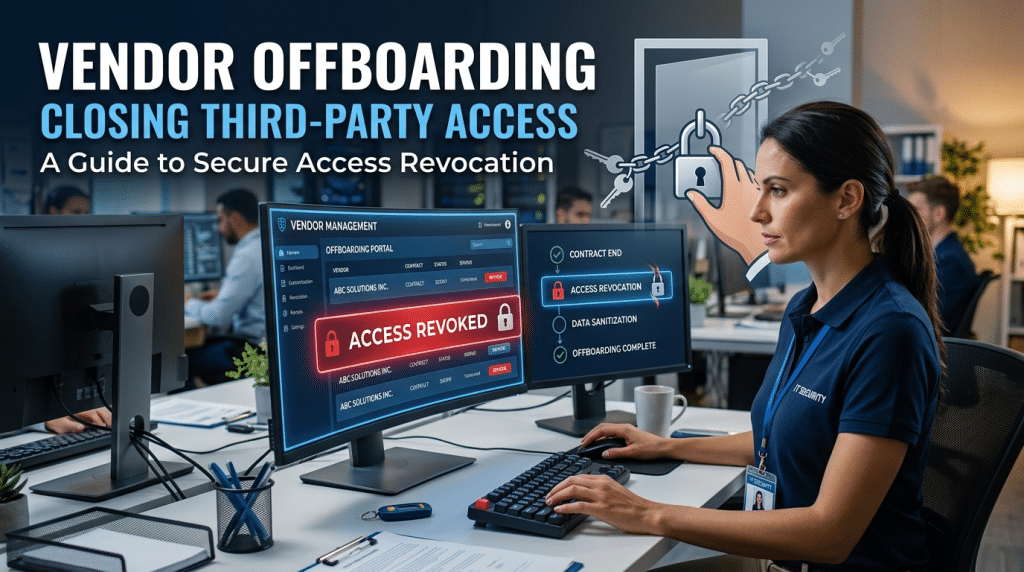
Vendor Offboarding: Closing Third-Party Access
August 20, 2026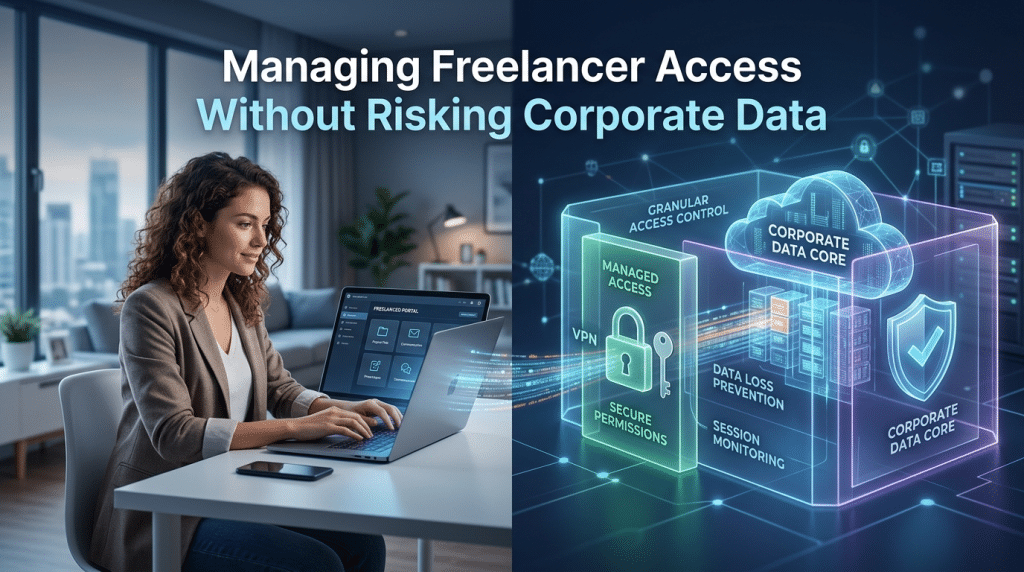
Managing Freelancer and Contractor Access Without Risking Corporate Data
Engaging freelance talent, specialized consultants, and third-party contractors is essential for modern business agility. Whether onboarding an external developer for a sprint, hiring a contract designer for a brand refresh, or working with specialized marketing experts, contingent workers provide critical skills without the overhead of full-time hiring.
However, integrating temporary staff introduces significant data security challenges. Contractors often work from personal laptops, connect via public Wi-Fi, and collaborate simultaneously with multiple clients.
Giving external workers broad access to corporate systems creates major vulnerabilities, including data exfiltration, malware injection, and compliance failures. Conversely, overly restrictive policies can stall project momentum and frustrate collaborators.
Securing corporate data while empowering external talent requires shifting away from broad access grants toward structured, Zero-Trust access governance.
The Core Risks of Contractor Engagements
Managing external contributors comes with specific threat vectors distinct from full-time employees:
- Unmanaged Devices (BYOD): Contractors rarely use company-issued hardware. Their personal computers may lack updated security patches, lack active endpoint protection, or harbor pre-existing malware and infostealers.
- Access Creep and Excessive Permissions: To save time, internal managers often grant contractors full access to primary shared drives or administrative portal roles rather than scoping access down to specific folders or repositories.
- Lingering Post-Project Access: When a contract ends, contractor accounts, VPN profiles, and cloud permissions frequently stay active indefinitely, creating forgotten “orphan accounts” that attackers target.
- Shadow Data Proliferation: Contractors often download sensitive customer databases or intellectual property to personal local drives, cloud storage accounts, or portable USB thumb drives, removing that data from corporate governance.
Best Practices for Secure Contractor Access Management
Implementing practical safeguards allows businesses to leverage specialized talent while keeping intellectual property and customer records strictly protected.
1. Enforce the Principle of Least Privilege
Never grant a contractor organization-wide permissions. Apply strict Role-Based Access Control (RBAC) to ensure contractors can only view and edit resources essential to their immediate scope of work.
Use granular folder-level sharing within Microsoft 365, Google Workspace, or cloud databases instead of providing broad network or drive access.
2. Implement Virtual Desktop Infrastructure (VDI) or Secure Browsers
Avoid allowing contractors to download raw corporate data onto personal machines.
Instead, provide access through managed Virtual Desktop Infrastructure (such as Azure Virtual Desktop) or secure enterprise browser solutions. This approach keeps sensitive applications, source code, and customer records isolated within a secure corporate cloud session—preventing unauthorized local file downloads, clipboard copying, and screen captures.
3. Mandate Context-Aware Multi-Factor Authentication (MFA)
Ensure all external accounts require phishing-resistant multi-factor authentication.
Combine MFA with Conditional Access policies that evaluate login context. For instance, restrict contractor logins to specific geographic regions, block access from anonymized Tor exit nodes, and trigger automated re-authentication when logins occur outside established working hours.
4. Assign Pre-Set Expiration Dates to Contractor Credentials
Automate offboarding by establishing hard expiration dates on all guest user accounts, shared links, and access tokens at the moment of creation. If an engagement spans thirty days, configure the identity provider to disable the account automatically on day thirty unless a manager formally approves an extension.
5. Continuously Monitor Activity and Log Data Access
Deploy continuous monitoring across file-sharing repositories, identity portals, and cloud environments. Track and audit contractor activity for unusual behavior, such as bulk file exports, abnormal off-hours logins, or attempts to access restricted network zones.
Secure Your Extended Workforce with Krypto IT
Managing external talent should accelerate your business growth, not increase your cybersecurity risk.
At Krypto IT, we help Houston businesses build robust contractor access governance frameworks, deploy secure cloud virtual desktops, and enforce Zero-Trust controls that protect critical corporate assets without slowing down project delivery.
Are external contractors creating unmonitored security gaps in your business? Contact Krypto IT today to schedule a comprehensive access management assessment.