M365 vs. Google Workspace: SMB Security Comparison
July 15, 2026
QuickBooks Security: Protecting Your Business Financial Core
July 17, 2026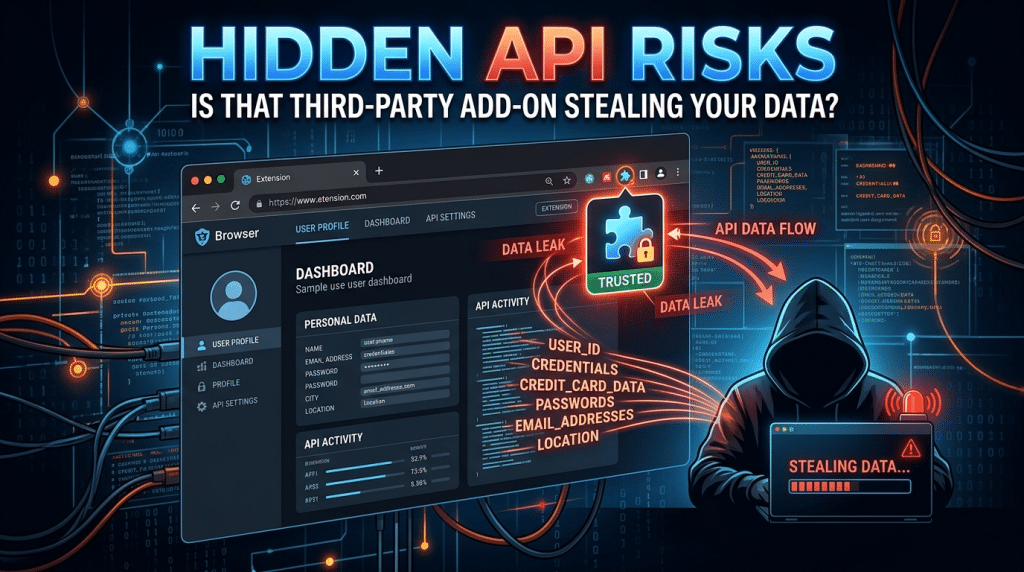
The Danger of “App Integrations”: Is That Third-Party Add-on Stealing Your Data?
When enterprise leadership evaluates their corporate data footprint, the conversation almost always focuses on direct entry points. Organizations invest heavily in perimeter firewalls, configure strict endpoint encryption rules, and mandate multi-factor authentication (MFA) to lock down human credentials. The standard assumption is that if an employee’s password is safe, the data within your productivity suites remains securely under your absolute control.
However, a massive architectural blind spot is quietly expanding across the modern software-as-a-service (SaaS) landscape: the unchecked sprawl of third-party app integrations.
Driven by a natural corporate desire for efficiency, your workforce routinely links external add-ons, productivity boosters, and automated tools directly into their core workspace environments. With a single click of an OAuth consent button, a user can connect a third-party application to their corporate email, customer relationship management (CRM) platform, or cloud storage drive.
What most business leaders fail to realize is that this simple act completely bypasses traditional security perimeters. Cybercriminals have shifted their strategy; instead of breaking through your front door, they are compromising the trusted third-party tools you willingly let inside. To protect your corporate capital, eliminate active data gaps, and defend your internal networks, leadership must understand the severe risks buried within app integration supply chains.
The Illusion of Safety: How the Attack Vector Operates
To understand why traditional firewalls and text-string authentication loops fail to intercept integration-based data leaks, you must analyze the mechanics of open authentication (OAuth) tokens.
When an employee connects an app—such as a smart calendar scheduler, an automated email organizer, or a collaborative data loader—they do not share their network password. Instead, the cloud provider generates a digital certificate called a token, giving the third-party application direct API (Application Programming Interface) access to the user’s files and accounts.
Threat actors aggressively exploit this trust architecture through two highly effective methods:
1. Illicit Consent Grant Phishing
Cybercriminals create entirely fake, malicious applications with innocent-sounding names like “Adobe Document Viewer” or “System Sync Loader”. They distribute phishing emails or use voice-phishing (vishing) scripts to trick employees into signing in and clicking “Accept” on a real Microsoft or Google authentication prompt.
The moment the worker clicks accept, the attacker-controlled app inherits the user’s data access privileges. The threat actor can now query, download, and exfiltrate sensitive corporate files without ever needing to know the employee’s password or trigger an MFA alert.
2. Supply Chain Integration Hijacking
Even if your employees only install legitimate, well-known productivity tools, you are still carrying major risk. High-profile cybercriminal campaigns have targeted the backend infrastructure of popular third-party SaaS vendors that integrate directly with massive enterprise hubs.
By breaching a vendor’s code repository or cloud keys, attackers steal the valid OAuth tokens that connect the vendor to hundreds of downstream client environments. The malicious activity looks identical to legitimate automation from a trusted app, allowing the hacker to quietly siphon off mass quantities of your data without raising a single security flag.
Why Integration Access Survives Standard Defensive Measures
The structural danger of an authorized application integration lies in its permanent, non-human identity nature. When a standard password is changed or a user updates their multi-factor authentication token, the network edge resets the security boundaries for that human operator.
App integrations do not work that way. Once an application receives an OAuth grant or an administrative token, it establishes an independent service principal inside your tenant.
This connection operates continuously in the background, surviving routine corporate security changes. If an employee falls victim to a malicious integration, changing their password, forcing an MFA reset, or even removing their local computer from the network will not sever the attacker’s line of sight. The malicious app retains access to read your emails, audit your financial transactions, and pull your client records until an administrator explicitly revokes the specific application token from the deep backend cloud settings.
Hardening the Perimeter Against Third-Party API Sprawl
Mitigating the threat of integration-driven data theft does not require banning all modern software enhancements or introducing severe, administrative barriers that completely paralyze daily business workflows. True organizational resilience relies on deploying automated, zero-trust infrastructure guardrails that govern non-human identities with absolute control.
At Krypto IT, we help growth-minded companies eliminate integration vulnerabilities by hardcoding automated safety parameters directly into your enterprise environment:
- Enforcing Strict App Governance and Consent Restrictions: We remove the dangerous ability for individual employees to authorize external applications by default. We configure your Microsoft 365 or Google Workspace tenant to enforce an administrative vetting process. If a worker wants to connect an app, it must be automatically blocked and routed to an IT admin for risk evaluation before any data tokens are granted.
- Deploying Real-Time Secure Web Gateways (SWG): We isolate your endpoints from malicious developer portals and phishing redirect URLs. By utilizing real-time cloud web filtering, we block your workers from reaching fraudulent OAuth grant pages, shutting down the social engineering attack loop before an integration token can ever be created.
- Anchoring Environments in Dynamic Biometric Identity and Token Audits: We maintain total visibility over non-human identities. We integrate automated discovery pipelines that scan your cloud environment continuously for inactive, over-privileged, or unverified app tokens. Furthermore, we protect core system changes behind rapid biometric verification (such as Windows Hello and Touch ID), ensuring that no threat actor can modify your tenant sharing properties without hardware-validated physical approval.
Conclusion: Stop Letting Third-Party Apps Gamble With Your Data
In the modern cloud economy, assuming your data is safe simply because your passwords are secure is an unsustainable approach to corporate risk management. Threat actors recognize that human consent fatigue is their greatest asset, and a single rushed click from an exhausted worker can give an attacker persistent access to your entire digital architecture.
True resilience demands absolute visibility over every single machine identity, API connection, and automated workflow interacting with your files. By hardcoding strict consent gates, deploying proactive web filtering, and auditing your existing application ecosystem, you eliminate the invisible integration tax and keep your corporate capital entirely secure.
Are your employees’ favorite third-party productivity shortcuts quietly providing cybercriminals with a hidden, un-filterable back door into your corporate network? Contact Krypto IT today for a comprehensive Cloud Infrastructure and Third-Party App Integration Security Review, and let’s lock down your perimeter.