Guest Privacy: Securing Digital Check-ins
March 26, 2026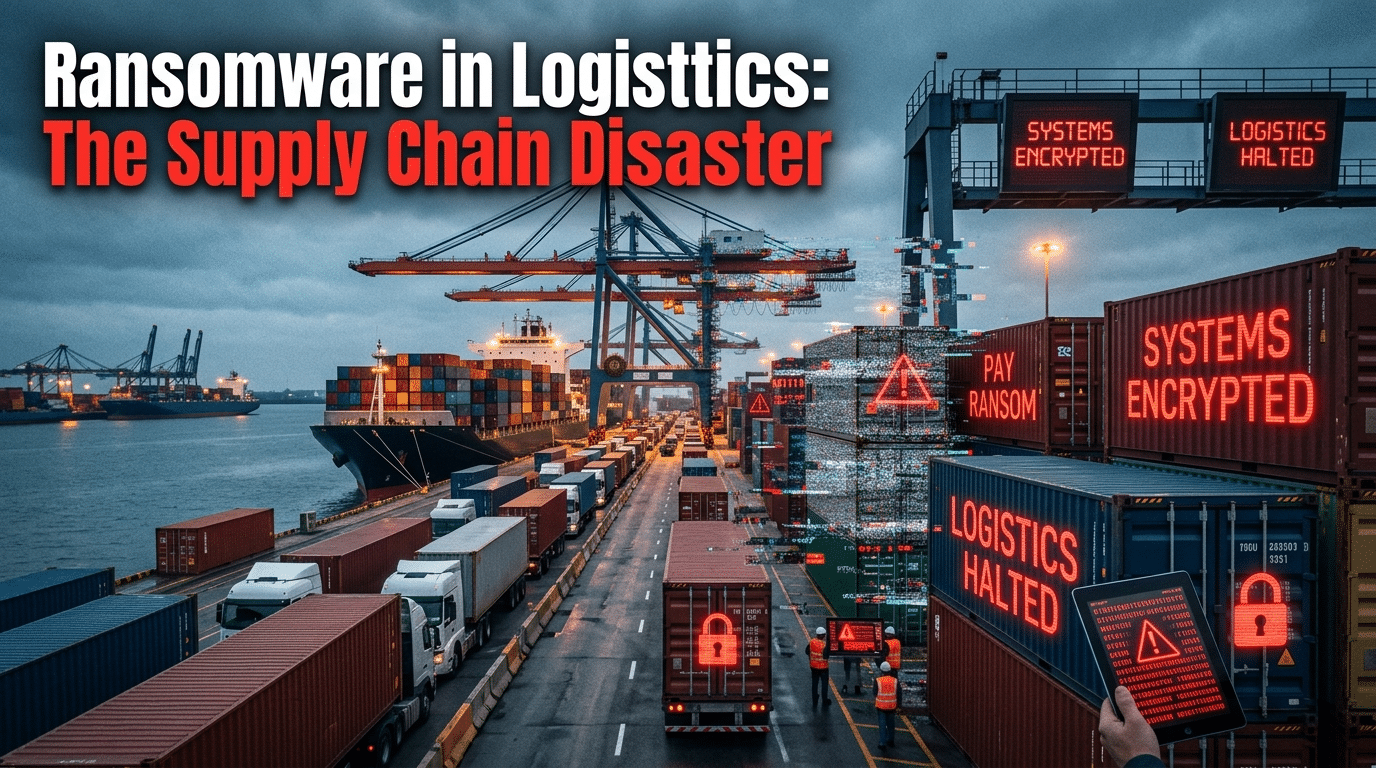
The Logistics Gridlock: Why Ransomware on Your Fleet is a Global Supply Chain Disaster
Operational Continuity & Resilience Stress Test by Krypto IT | Defending Houston’s Global Gateway
In the logistics heart of Houston—where the Port of Houston moves over 50 million tons of cargo annually and thousands of trucks depart daily for the I-10 and I-45 corridors—the “Engine” of the economy is no longer just diesel and steel. It is data. In 2026, your fleet is a rolling network of sensors, GPS trackers, and Electronic Logging Devices (ELDs).
At Krypto IT, we recognize that for a logistics firm, a ransomware attack isn’t just a “Business Interruption.” It is a Kinetic Disaster. When your servers go dark, your trucks stop moving, your cargo becomes “lost” in the yard, and the entire supply chain grinds to a halt. This stress test analyzes why a digital attack on your fleet creates a ripple effect that can be felt across the globe.
1. The Gridlock Coefficient (G_c)
In logistics, efficiency is a product of visibility. If you can’t see the truck, you can’t bill the client, and you can’t assign the next load. When ransomware encrypts your Transportation Management System (TMS), your “Visibility” drops to zero.
As your “Digital Visibility Index” approaches zero during a ransomware event, the Gridlock Coefficient approaches infinity. This isn’t just a mathematical abstraction; it represents the moment your dispatchers start using whiteboards and sticky notes to manage a 500-truck fleet. In 2026, “Manual Logistics” is a recipe for a catastrophic loss of revenue.
2. The “Ghost Fleet” Scenario: ELDs as a Backdoor
The greatest vulnerability in a 2026 fleet isn’t the headquarters; it’s the Electronic Logging Device (ELD) in every cab. These devices are mandated by law, but they are often the weakest link in your digital perimeter.
The Stress Test Scenario:
- The Breach: A hacker infiltrates your central fleet management portal and pushes a malicious firmware update to every ELD in your fleet.
- The Result: Your trucks are physically disabled, or their GPS data is falsified. Your drivers are locked out of their logs, making it illegal for them to be on the road.
- The Disaster: You now have a “Ghost Fleet”—hundreds of millions of dollars in assets sitting idle on the shoulder of the highway or in a terminal in Barbers Cut, unable to move while the ransom clock ticks.
3. The Downstream Ripple: JIT (Just-in-Time) Failure
Houston’s manufacturing and energy sectors rely on Just-in-Time (JIT) delivery. When a logistics firm is hit by ransomware, the disaster doesn’t stay with the carrier. It flows downstream to the manufacturer who can’t finish their product, and upstream to the port that is now facing a massive container bottleneck.
A single ransomware attack on a mid-sized Houston carrier can cause:
- Demurrage Charges: Thousands of dollars in daily fines for containers sitting at the port because your trucks can’t “check-in” digitally.
- Contractual Penalties: “Late Delivery” clauses in your service level agreements (SLAs) can be triggered instantly, leading to multi-million dollar liabilities.
- Reputational Blacklisting: In the “Trust Economy,” a logistics firm that can’t guarantee digital resilience is a firm that major retailers and manufacturers will stop using.
4. Forensic Recovery: The “Perishable Data” Problem
In logistics, data is perishable. Information about where a refrigerated container was three hours ago is useless if it’s currently sitting at 80 degrees in the Houston sun because the “Cold Chain” monitoring system was encrypted.
At Krypto IT, we prioritize Operational Resilience over simple “Backup.” We ensure that your most critical transit data is mirrored in a “Clean Room” environment that cannot be touched by the primary ransomware strain, allowing you to reboot your dispatch operations in hours, not weeks.
How Krypto IT Fortifies Houston’s Logistics Leaders
We don’t just “manage IT”; we provide the digital armor for your fleet. Krypto IT secures the supply chain through:
- ELD Perimeter Hardening: Ensuring your vehicle-to-cloud connections are encrypted and authenticated with biometric identifiers.
- TMS “Clean Room” Architecture: Isolating your Transportation Management System so that a breach in accounting doesn’t stop the trucks.
- Real-Time Threat Hunting: Our SOC monitors for “Anomaly Traffic”—like a sudden mass-firmware update request—and kills it before it reaches the fleet.
- Supply Chain Continuity Planning: Helping you draft the “Digital Plan B” that keeps your dispatchers operational even during a total network blackout.
Conclusion: Resiliency is the New Velocity
In 2026, the fastest fleet in Houston isn’t the one with the biggest engines; it’s the one with the strongest firewall. If your digital infrastructure is brittle, your supply chain is a disaster waiting to happen.
Is your fleet “Stress Test” ready? Contact Krypto IT today for a “Supply Chain Resilience Audit” and let’s keep Houston moving.