How to Pass Your Next Cyber Insurance Audit with Flying Colors: A Guide for Houston SMBs
February 8, 2026
Securing the Shop Floor: A Manufacturing Owner’s Guide to Protecting Intellectual Property
February 11, 2026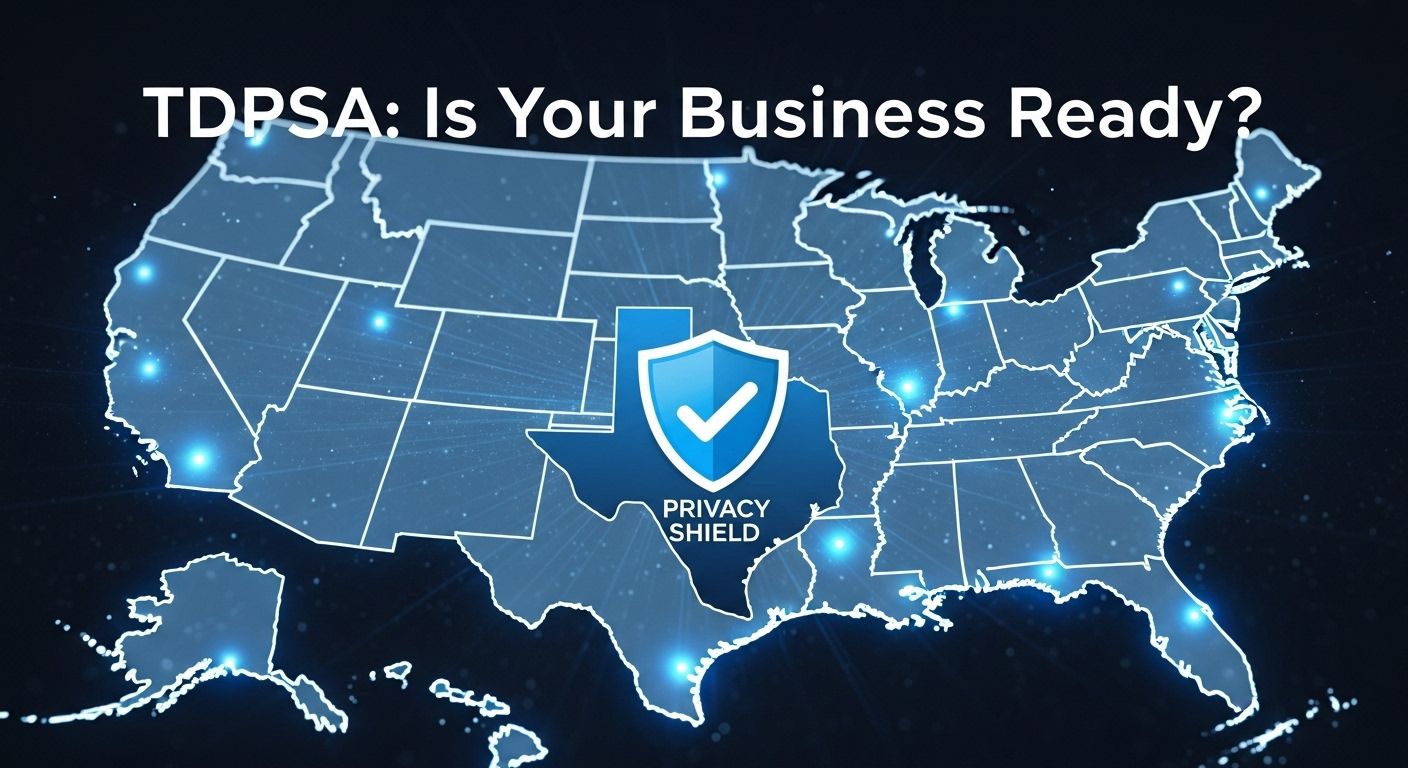
By the Team at Krypto IT | Your Houston Partners in Data Privacy and Cyber Security
For years, many Houston business owners looked at data privacy laws as “someone else’s problem.” They assumed that unless they were a giant tech firm in Silicon Valley or a global bank, the strict rules of the California Consumer Privacy Act (CCPA) or Europe’s GDPR didn’t apply to them.
In 2026, that assumption is a legal liability.
A “Privacy Patchwork” has emerged across the United States. States from Virginia to Utah, and most importantly for us, Texas, have enacted their own sweeping data privacy regulations. The Texas Data Privacy and Security Act (TDPSA) is now in full effect, and unlike some other state laws, it doesn’t have a massive revenue threshold. If you conduct business in Texas and handle the personal data of Texans, you are likely “in scope.”
At Krypto IT, we believe privacy is the new frontier of cybersecurity. Here is what you need to know to ensure your small business stays on the right side of the law.
1. The Core Principles of State Privacy Laws
While every state law is slightly different, they all generally revolve around a set of “Consumer Rights.” As a business owner, you are now expected to be a “Data Controller” who can honor these requests:
- The Right to Know: Consumers can ask what data you have on them.
- The Right to Delete: Consumers can ask you to wipe their data from your servers.
- The Right to Correct: If you have the wrong address or info, they can force an update.
- The Right to Opt-Out: Consumers can tell you to stop selling their data or using it for targeted advertising.
2. The “Small Business” Trap in Texas
Many national privacy laws only apply to companies making over $25 million. The Texas TDPSA is different. It applies to any person or entity that:
- Conducts business in Texas or produces products/services consumed by Texas residents.
- Processes or engages in the sale of personal data.
- Is NOT a “small business” as defined by the Small Business Administration (SBA).
However, even if you are a small business under SBA rules, you are still prohibited from selling “sensitive personal data” without getting prior consent. In the eyes of the law, “Sensitive Data” includes everything from biometric data and precise geolocation to health information and religious beliefs.
3. Calculating Your Data Liability
At Krypto IT, we help our clients understand their risk through what we call the Data Liability Formula (L_d):
L_d = V x S / C_(eff)
Where:
- V = Volume of unique consumer records held.
- S = Sensitivity of the data (e.g., PII, medical, financial).
- C_(eff) = Effectiveness of your security controls (MFA, Encryption, Access Reviews).
If your volume and sensitivity are high, but your controls are low, your liability is a ticking time bomb for both a data breach and a regulatory fine from the Texas Attorney General.
4. The Three-Step Readiness Plan
How do you move from “vulnerable” to “compliant”? We recommend these three immediate actions:
A. The Data Map
You cannot protect what you don’t know you have. You must create a “Data Map” that shows where consumer info enters your business, where it is stored (which cloud apps?), and who it is shared with (which vendors?).
B. The “Privacy Policy” Refresh
Your website’s privacy policy can no longer be a “copy-paste” job from 2018. It must explicitly state what data you collect, why you collect it, and—most importantly—provide a clear way for a Houston resident to submit a “Request to Delete.”
C. The Vendor Audit
If you share data with a third-party marketing firm or a cloud provider, and they have a breach or a privacy violation, you could still be held responsible. You must ensure your contracts include the proper “Data Processing Agreements” required by state law.
5. Privacy as a Competitive Advantage
We often tell our Houston clients: Privacy is a sales tool. In an era of deepfakes and constant leaks, consumers are flocking to businesses they can trust. When you can look a client in the eye and say, “Your data is encrypted, we never sell it, and we honor your privacy rights,” you aren’t just being compliant—you are building a premium brand.
How Krypto IT Secures Your Compliance Journey
Navigating the TDPSA and other state laws is overwhelming for a busy business owner. Krypto IT acts as your outsourced Privacy and Security team:
- Data Discovery Scans: We use automated tools to find every “nook and cranny” where PII might be hiding on your network.
- Access Control Implementation: We ensure that only the employees who need to see sensitive data have access to it.
- Encryption at Rest: We make your data useless to hackers by encrypting it according to the highest NIST standards.
- Policy & Procedure Support: We help you draft the technical documentation you need to prove you are a responsible data steward.
Conclusion: The Era of “Casual Data” is Over
The days of collecting every scrap of data “just in case” are gone. In 2026, data is a liability until it is secured. By taking proactive steps now, you protect your Houston business from legal headaches and win the trust of your community.
Not sure if the TDPSA applies to you? Contact Krypto IT today for a “Data Privacy Risk Assessment” and let’s get your business ready for the new era of privacy.