Vacation Coverage: The Skeleton Crew Threat
September 15, 2026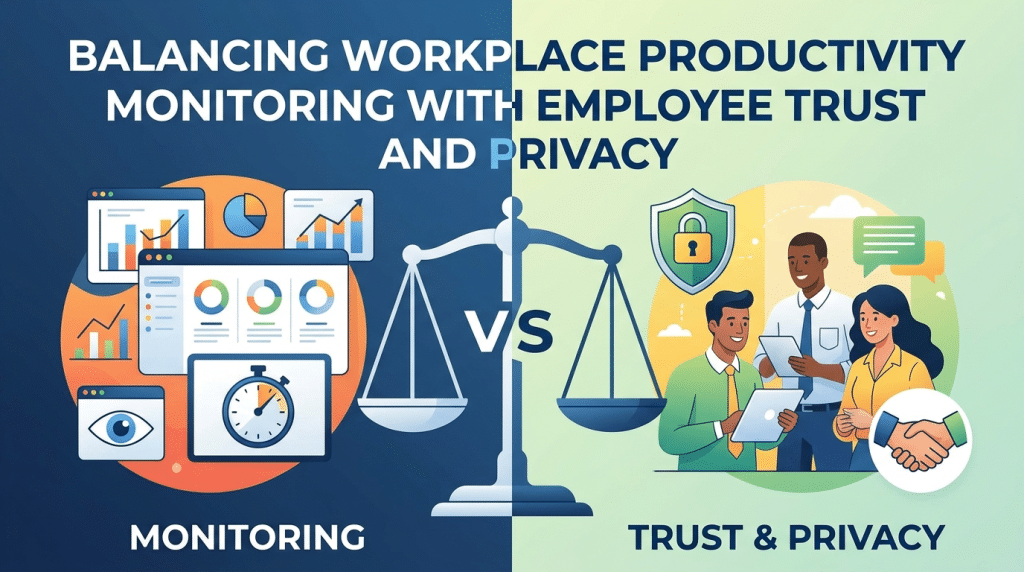
Balancing Workplace Productivity Monitoring with Employee Trust and Privacy
The transition to permanent hybrid, distributed, and remote work arrangements has transformed corporate operations. Without the shared physical presence of a central office, business leaders face an operational challenge: how to maintain visibility into productivity, safeguard corporate intellectual property, and detect operational bottlenecks across dispersed teams.
In response, many organizations turned to employee productivity tracking software. The global market for digital monitoring tools has surged, offering capabilities ranging from high-level application usage summaries to granular tracking mechanisms like continuous keystroke logging, periodic desktop screen captures, webcam snapshots, and mouse-movement tracking.
However, unchecked deployment of surveillance tools frequently creates the very issues it aims to prevent.
When security and productivity monitoring cross into invasive digital surveillance, company culture deteriorates rapidly. Top performers feel distrusted, workplace stress escalates, and employees find clever workarounds—such as hardware mouse jigglers or simulated activity scripts—rendering collected metrics meaningless.
Securing business workflows and measuring output does not require intrusive surveillance. Striking the right balance requires aligning data security needs with employee privacy, transparent governance, and outcome-oriented management.
The Hidden Costs of Invasive Workplace Surveillance
Before deploying granular monitoring software across corporate endpoints, leadership teams should evaluate the severe operational downsides:
1. The Destruction of Organizational Trust
Trust is foundational to high-performing teams. When employees discover their screens are being silently captured or their keystrokes logged, the psychological contract with leadership breaks down. Staff perceive monitoring not as operational optimization, but as an indictment of their integrity. This breakdown drives turnover, especially among senior technical talent who can easily find employers offering higher autonomy.
2. Gamification and “Productivity Theater”
Granular monitoring tools measure activity proxies, not meaningful output. An employee can generate thousands of keystrokes or keep an application window active without generating business value. Faced with aggressive software quotas, workers shift energy toward “productivity theater”—wiggling mice, keeping chat windows in focus, and generating artificial clicks—sacrificing real creative problem-solving to satisfy an algorithm.
3. Expanding the Data Security Threat Surface
Productivity surveillance tools are themselves massive data repositories. If an agent records screen captures, it inevitably captures sensitive personal data: online banking sessions accessed during lunch breaks, telehealth portals, private family messages, and employee credentials. Storing these continuous video and image streams creates a severe liability. In the event of a breach, that surveillance server becomes an unencrypted treasure trove for extortionists.
4. Legal, Compliance, and Labor Law Exposure
Privacy regulations are increasingly penalizing unannounced employee surveillance. Frameworks like the European Union’s GDPR, state-level regulations like California’s CCPA/CPRA, and evolving National Labor Relations Board (NLRB) guidance strictly limit employer surveillance. Deploying monitoring tools without clear notice, explicit purpose limitations, and verified data retention boundaries can expose organizations to regulatory penalties and employee lawsuits.
Framework for Ethical, Balanced Workplace Monitoring
Organizations can protect corporate data and maintain operational visibility without eroding trust. A balanced approach relies on four core principles:
1. Measure Outcomes Over Synthetic Activity
Shift management metrics from active keystroke counts and screen time to tangible business deliverables. Evaluate employees on code committed, client tickets resolved, revenue generated, and project milestones completed on schedule. When output is the primary metric, monitoring keystrokes becomes redundant.
2. Focus on Data Protection, Not Idle Time
Reframe monitoring around cybersecurity rather than personal productivity. Deploy Endpoint Detection and Response (EDR) and Data Loss Prevention (DLP) tools focused on threat vectors:
- Flagging unauthorized file exfiltration to external USB drives or personal cloud accounts
- Detecting mass downloads of client lists prior to employee departures
- Blocking access to credential phishing domains or malicious websites
- Monitoring system health, patch compliance, and configuration drift
Employees widely accept security monitoring when its scope is strictly defined to protecting corporate infrastructure rather than tracking bathroom breaks.
3. Mandate Radical Transparency
Never deploy covert monitoring tools on workstations. Draft a comprehensive, plain-language Acceptable Use Policy (AUP) that clearly answers:
- What data is collected (e.g., application names, website URLs, and access logs)
- What data is explicitly never collected (e.g., keystroke logging, private messages, personal webcam video)
- Who has access to the collected data and under what circumstances
- How long telemetry logs are retained before automated deletion
When leadership is upfront about why tools exist and where boundaries lie, friction decreases significantly.
4. Provide Privacy Controls for Bring-Your-Own-Device (BYOD) and Personal Time
In hybrid environments, lines blur when employees use personal phones or work laptops after hours. Configure Mobile Application Management (MAM) to create isolated, encrypted corporate sandboxes on personal hardware, ensuring that management telemetry never monitors personal applications, personal photos, or private browsing history.
Build Secure, High-Trust Workplaces with Krypto IT
Effective cybersecurity protects organizational data while empowering teams to perform at their best.
At Krypto IT, we help Houston-area and remote-first businesses establish modern IT security architectures that safeguard corporate assets, maintain compliance, and protect employee trust. From automated DLP and zero-trust identity management to clear governance policies, we ensure your organization stays secure without compromising corporate culture.
Looking to protect corporate data without undermining employee trust? Contact Krypto IT today to design a modern, compliant data security and endpoint governance strategy.