
Juice Jacking: The Public Charging Travel Hazard
September 14, 2026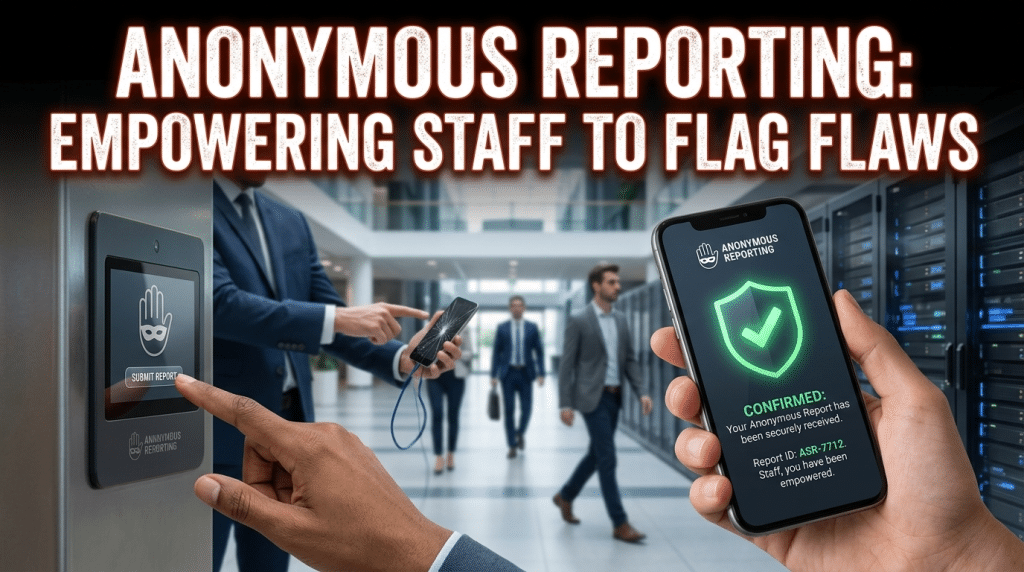
Whistleblower and Anonymous Reporting: Giving Employees Safe Ways to Flag Security Flaws
In modern enterprise cybersecurity, organizations spend substantial budgets on automated telemetry: Security Information and Event Management (SIEM) systems, endpoint detection agents, intrusion detection sensors, and automated vulnerability scanners.
Yet, across countless post-incident forensic investigations, one striking reality consistently emerges: somebody on the inside already knew.
Long before a vulnerability resulted in a catastrophic data breach or ransomware deployment, an employee usually noticed the crack in the foundation. A software engineer noticed that sensitive database credentials were hardcoded into a public repository. A customer service representative realized a procedural shortcut bypassed customer identity verification. An account manager saw a departing colleague quietly copy thousands of client records to an unmanaged personal USB drive.
Despite noticing these critical security risks, employees frequently choose not to speak up.
When organizations lack secure, confidential, and truly anonymous mechanisms to report security vulnerabilities and compliance deviations, fear of retaliation or peer friction silences the frontline. Establishing a structured whistleblower and anonymous reporting program is not just a regulatory formality—it is one of the most cost-effective early warning systems an enterprise can deploy.
Why Internal Security Flaws Go Unreported
Understanding why staff stay silent is the first step toward building an effective internal reporting framework:
1. Fear of Professional Retaliation
If flagging an insecure operational shortcut exposes a direct supervisor’s negligence or slows down a high-visibility product release, employees fear being labeled “difficult.” Staff worry about missed promotions, sidelined project assignments, or outright termination if their identity is attached to the report.
2. The Cultural Myth of the “Snitch”
Workplace cultures often stigmatize reporting operational shortcuts taken by colleagues. When security issues are handled solely through interpersonal confrontations or direct managerial chains, employees often decide that keeping the peace with teammates outweighs corporate risk management.
3. Lack of Verified Anonymity
Many organizations boast of an “open-door policy,” yet their only reporting mechanisms are internal corporate email addresses or corporate messaging channels (like Slack or Teams). Knowledgeable employees know that corporate IT and management can inspect message logs, track sender identity, and correlate timestamps, destroying any pretense of confidentiality.
4. Skepticism Around Action (The Black Hole Effect)
When employees previously flagged operational concerns through standard feedback channels and saw zero visible follow-up or remediation, they conclude that raising alarms is a waste of professional capital.
Architecture of a Trusted Anonymous Reporting System
Building a reporting mechanism that employees will actually trust requires concrete technical and procedural safeguards:
1. Deploy Independent, Out-of-Band Reporting Channels
Never route confidential security reports through the company’s own email servers or internal ticketing queues. Implement an independent, third-party reporting platform that operates completely outside your corporate domain.
- The platform should support cryptographically secure, two-way anonymous messaging, enabling security analysts to ask clarifying technical questions without ever learning the reporter’s identity or IP address.
- Ensure that connection logs, metadata, and browser user-agent strings are stripped immediately upon submission.
2. Expand Scope Beyond Financial Fraud
Historically, enterprise whistleblower hotlines were created to satisfy corporate compliance and financial fraud regulations (such as Sarbanes-Oxley). Modern reporting programs must explicitly invite disclosures regarding:
- Unpatched vulnerabilities, exposed API keys, and insecure storage buckets
- Procedural bypasses that circumvent access control or multi-factor authentication (MFA)
- Coercion by leadership to skip mandatory security reviews to meet launch deadlines
- Suspected insider data exfiltration or unauthorized system access
3. Formalize a Rigid Non-Retaliation Policy
An anonymous reporting channel is useless without explicit, enforceable protections. Leadership must draft and sign a binding, zero-tolerance non-retaliation policy. Any supervisor or executive found attempting to de-anonymize, penalize, or isolate a reporting employee must face severe disciplinary action.
4. Close the Loop with Transparent Governance
Maintain credibility by publishing regular, aggregated disclosure summaries to the wider organization. Sharing metrics—such as “During Q2, three anonymous reports flagged misconfigured permissions, leading to immediate remediation”—proves to staff that the reporting channel leads to concrete action rather than corporate indifference.
Transforming Internal Vulnerability Discovery into Strength
A mature security posture treats internal whistleblowers and conscientious staff as valuable security assets, not internal adversaries.
When your workforce knows they can safely flag an insecure configuration, an unauthorized shortcut, or an overlooked compliance gap without risking their career, threats are identified and mitigated internally—long before an external auditor, a cyber extortionist, or a breaking news headline exposes the flaw to the world.
Harden Your Internal Security Posture with Krypto IT
True cybersecurity resilience combines robust perimeter defenses with an empowered, vigilant workforce.
At Krypto IT, we help Houston-area and remote-first organizations architect comprehensive cybersecurity governance programs, deploy secure communications infrastructure, and conduct independent third-party security audits that uncover internal vulnerabilities before attackers exploit them.
Are your employees empowered to safely report the security flaws they see every day? Contact Krypto IT today to evaluate and enhance your internal security reporting frameworks.